On-Site Walkthrough • Measured to Your Home

Custom Christmas Light Design in Charleston, SC

Most disappointing displays are not installation failures. They are design failures — the wrong white, a roofline that fights the eye, or a plan that ignored where the outlets actually are. We walk the property, measure every run, and put a plan on paper before a single strand is cut.

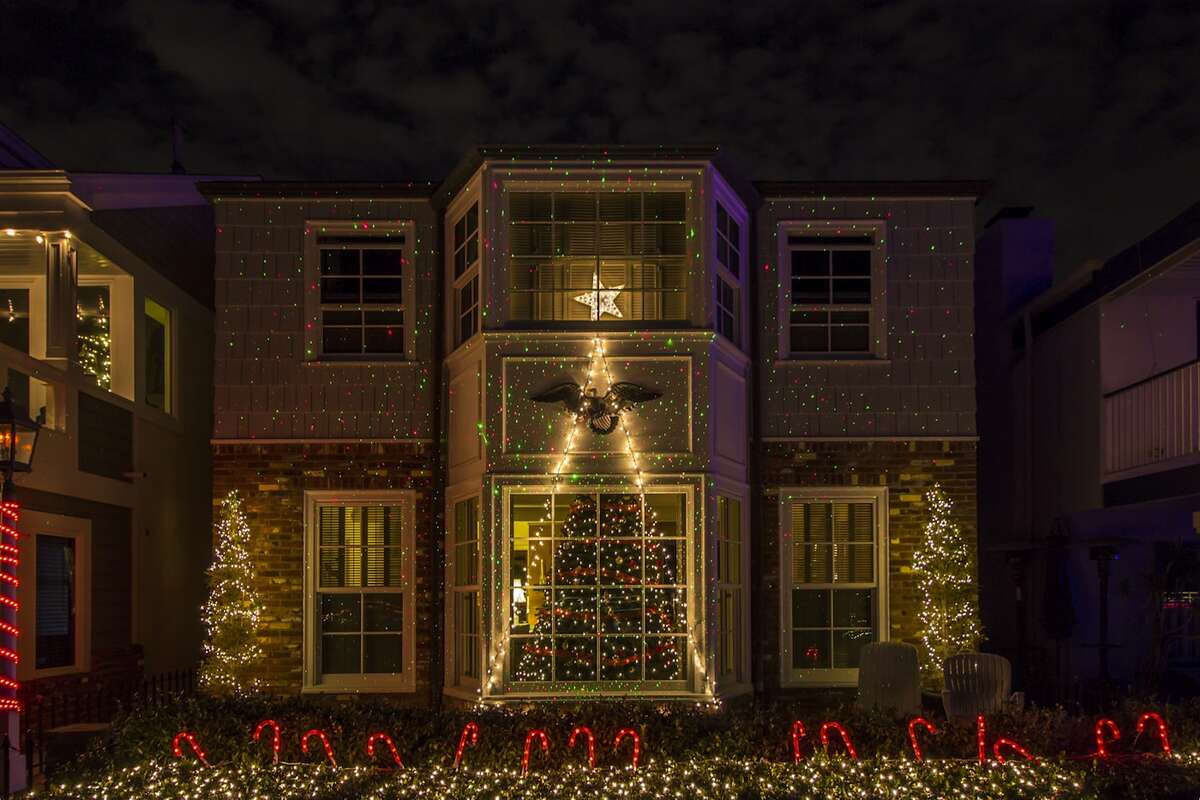
Custom designed Christmas light display on a Charleston, SC home

The Color Decision Comes First

Before anything else gets decided, we settle on color temperature, because every other choice follows from it and mixing two temperatures on one house is the single most common way a display goes wrong.

Warm white sits around 2700K. It reads amber, close to an old incandescent bulb, and it is the safer choice on Charleston's traditional housing stock — aged brick, stucco, and the soft pastels that show up across the peninsula. Against those surfaces, pure white can look clinical.

Pure white runs nearer 5000K and reads crisp, with a faint blue cast. It cuts sharply against dark trim and modern white siding, and it is what most people picture when they think of a clean, architectural roofline outline in Mount Pleasant or Daniel Island new construction.

Color — traditional red and green, or a fuller multicolor palette — changes the job entirely. Color displays live in the landscaping and the trees more than the roofline, because a colored roof outline tends to read as busy rather than festive. If color is what you want, we plan the layout differently from the start.

The one rule we hold to: pick one temperature and commit. A warm white roofline over pure white shrubs makes the roofline look dirty, and it is the sort of thing you cannot unsee once someone points it out.
Designing Around Charleston Architecture

A lighting plan that works in a suburb with simple gable rooflines does not transfer to a Charleston single house, and pretending otherwise is how displays end up looking like they were bought off a shelf.

What a Design Consultation Actually Covers

The consultation is a working site visit, not a sales call. Here is what comes out of it.

Measurement. Every roofline, window frame, column, and rail that might carry light gets measured. This is what lets us cut strands to length instead of coiling slack behind a downspout.

A sightline check. We look at the house from the street, from the driveway, and from wherever you actually pull in at night. Plenty of displays look great in a photo taken from the middle of the front lawn and disappear from the only angle the family sees daily.

A power audit. We find the exterior outlets, note which are GFCI-protected, and work out what can safely share a circuit. More on that below, because it is the constraint that quietly kills more displays than anything else.

A written plan and a firm number. You get the layout, the color temperature, the strand counts, and the price before you commit. Nothing changes on installation day unless you change it.

The Power Problem Nobody Plans For

This is the part of design that homeowners almost never think about and installers deal with constantly.

Older homes on the peninsula frequently have one or two exterior outlets, often on a single circuit shared with something else. LEDs draw far less than the old incandescent strands, which helps enormously, but "less" is not "nothing," and a full-property display with roofline, windows, shrubs, and a wrapped oak can still add up past what one circuit should carry.

The related issue is GFCI behavior. Exterior outlets are GFCI-protected, which is exactly what you want, and moisture in a connection will trip them. In a wet Charleston December that is not a rare event. A display designed as one long daisy chain off a single outlet means one tripped GFCI takes the entire house dark. Splitting the display across separate circuits means a trip takes out one section while the rest stays lit.

We also settle timer or photocell control at the design stage rather than leaving you to plug and unplug things in the cold. A photocell brings the display up at dusk on its own, and a timer shuts it down at whatever hour you pick.

What Custom Design and Installation Costs in Charleston

Professional installation nationally runs roughly $5 to $12 per linear foot. A basic roofline outline typically lands between $250 and $1,500, while a fuller package covering rooflines, windows, garage, driveway, shrubs, and trees runs from about $750 up past $5,000 on larger homes. Our pricing sits in that range, and the design consultation is folded into the installation rather than billed as a separate line.

What moves the number on a Charleston property:

Design consultations happen from late summer through the fall. The homes with the best displays are almost always the ones that were measured in September, not the ones that called the week after Thanksgiving.

Frequently Asked Questions

What is the difference between warm white and pure white Christmas lights?

Warm white sits around 2700K and reads amber or candle-colored. Pure white runs closer to 5000K and reads crisp, almost blue-tinted. Neither is better, but they clash badly side by side, so the choice has to be made for the whole display at once. Warm white flatters brick, stucco, and Charleston's traditional pastel exteriors; pure white looks sharper against modern white siding and dark trim.

Do I have to buy the lights, or do you provide them?

We provide commercial-grade LED strands cut to your home's measurements, and they stay part of our inventory between seasons. That is why the design step matters: the strands are built for your rooflines specifically, so there are no dangling extras or short runs spliced together with extension cords.

Can you match a display you did for a neighbor?

We can match the color temperature, bulb style, and general approach, but the strand lengths and layout are always measured to the individual house. Two homes on the same street rarely have the same roofline geometry, so a copied plan usually ends up with gaps at one end and slack at the other.

Will lights damage the trim on an older Charleston home?

Not with the right attachment. We use gutter and shingle clips sized to the surface and never drive nails, screws, or staples into historic wood trim, slate, or copper. On homes where the roofline offers nothing to clip to, we design around it, running the display along the piazza, windows, and landscaping instead of forcing hardware where it does not belong.

Ready to Design Your Display?

Call to book a walkthrough. Early-season consultations get the best install dates.

Call (843) 402-8028